Leggi questo articolo in italiano →
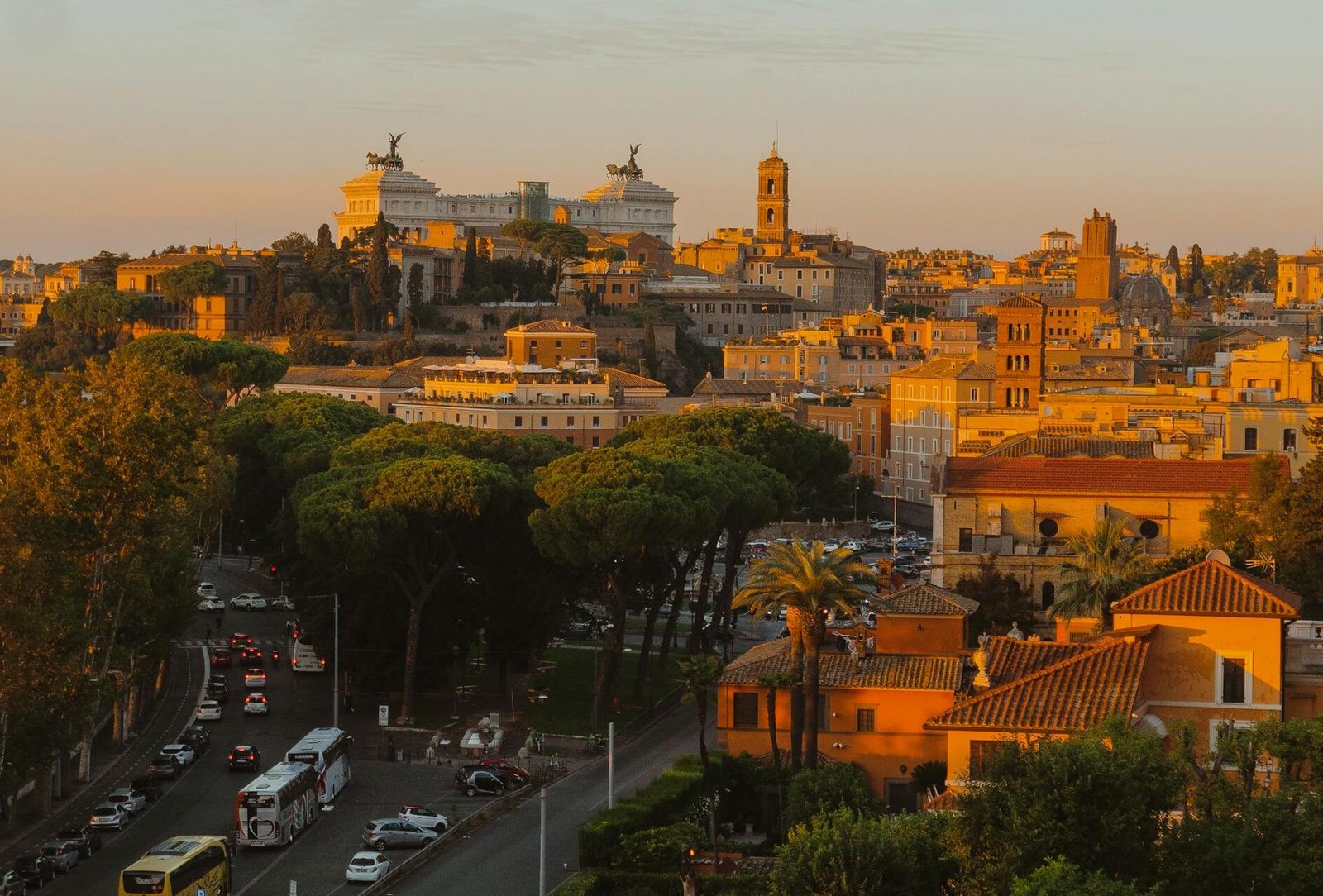
Stand on the Pincio Terrace in Rome at 16:30 on a December afternoon and Piazza del Popolo is lit from the side in amber, the dome of St Peter’s a cut-out against a sky that turns pink within twenty minutes. Do the same in July and you wait until almost 21:00 for that light, sharing the balustrade with two hundred people.
That is why the best time to propose in Italy is less a single date than three choices: the season, the day of the week and the hour. This guide works through all three from a photographer’s point of view, with the holidays and events that fill the piazzas and an approximate Rome sunrise and sunset table.
At a glance
- Top three windows: September anywhere in Italy; a weekday in late April or May; the first three weeks of December in Rome, Florence or Venice.
- Best hour: sunrise for empty landmarks, the last hour before sunset for warm light on faces, blue hour for lit fountains and bridges.
- Avoid: Easter weekend, 25 April to 1 May, Ferragosto (15 August) and the week between Christmas and Epiphany.
- The clock moves: Rome sunset is about 16:40 in December and 20:45 in June.
- Who this suits: couples with flexible dates, or a fixed trip and a free choice of hour.
- Budget: surprise proposal package in Rome 90 minutes from €490; travel destinations from €500+ (Florence) to €1,400+ (Tuscany).
Winter: empty landmarks and the softest light of the year
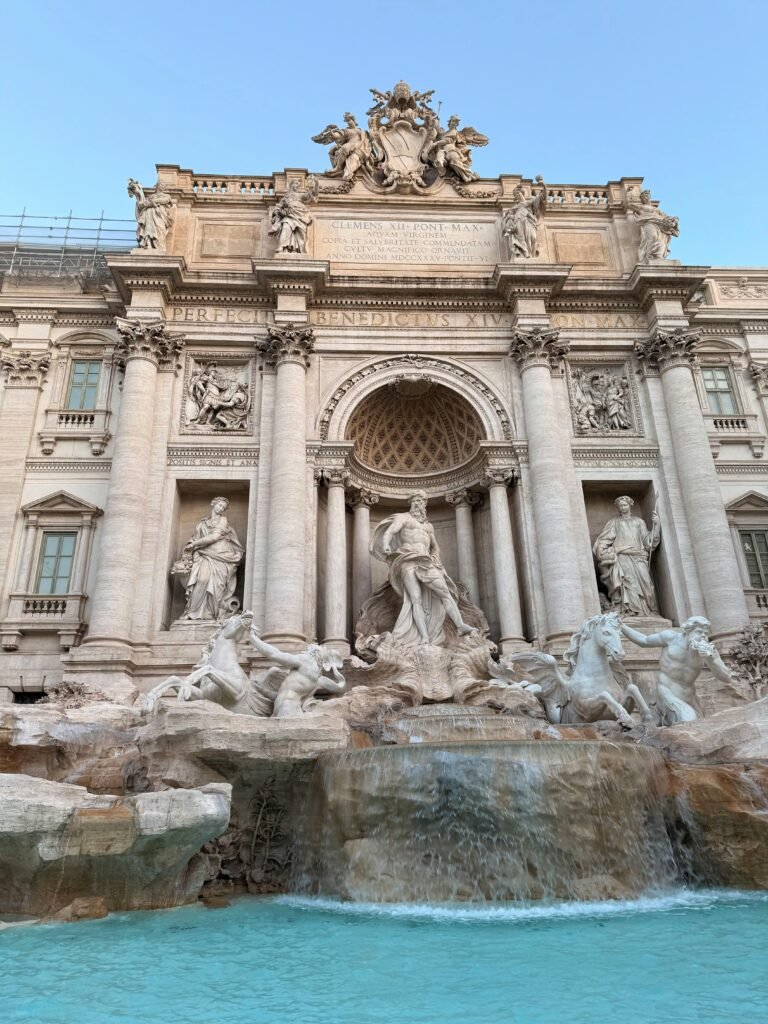
From early December to late February Italy hands you its landmarks almost to yourselves. On a January weekday we have photographed the Trevi Fountain at 07:30 with a dozen people around the basin. The sun stays low all day, so even at 13:00 the shadows are long and Rome’s travertine glows instead of glaring. The trade-off is the clock: Rome sunset is around 16:45 in December, so a sunset proposal comes before an early dinner and blue hour is over by 17:30. Venice and Milan are colder and often foggy, which photographs beautifully. Skip the week between Christmas and 6 January, when the centres fill again.
Best time: 1–20 December, January and February, on a weekday at 07:30 or from 15:30 to 17:00. Photographer’s tip: winter is the one season when a midday proposal works, because the sun never climbs high enough to flatten faces.
Spring: wisteria, green hills and the Easter crowds
Spring splits in two. From late March through April the wisteria comes out in Rome, on Via Margutta and in the lanes of Trastevere, for about three weeks. May belongs to Tuscany and the Val d’Orcia: green wheat, poppies along the roads and evening light raking the hills until after 20:00. The crowds arrive in steps: Easter weekend and Easter Monday are among the busiest days of the year in Rome, Florence and Venice, and 25 April to 1 May is a national long weekend. Clocks go forward at the end of March, so a sunset plan jumps from about 18:10 to 19:15 overnight.
Best time: late-April weekdays for Rome, May weekdays for Tuscany and the lakes, at sunrise or from 18:30 to sunset. Photographer’s tip: spring skies often carry broken cloud, which softens the light on faces without killing the colour.
Summer: long evenings, sunrise at 05:40 and the heat
Summer gives the longest light of the year and the hardest conditions. In June the sun rises over Rome at about 05:40 and sets near 20:45, so golden hour starts after 19:30 and blue hour runs past 21:00. The cost is the middle of the day: from 11:00 to 17:00 the light is vertical and harsh. Crowds peak from mid-June to the end of August; around Ferragosto many family-run restaurants in Rome and Milan close for a week or two, while the Amalfi Coast, Capri, Puglia and Sicily are at their fullest. At 05:30, though, the Colosseum and Positano’s Spiaggia Grande are empty and cool.
Best time: sunrise, 05:15 to 07:00, anywhere; or the last 45 minutes before sunset on the coast. Photographer’s tip: east-facing Positano loses direct sun by mid-afternoon in summer, so “sunset” there means soft shade rather than a glowing sky.
Autumn: September, the best all-round month to propose in Italy
If we could pick one month for a proposal anywhere in Italy, it would be September. The August crowds have thinned, the sea is still warm and the light has lost its glare, while sunset still falls at a civilised 19:20 in Rome. Ferries still run full timetables and Tuscany takes on harvest colours. October keeps the light and adds colour, with a real chance of showers and the return to standard time late in the month, when sunset moves an hour earlier on the clock. November is often Rome’s wettest month; empty piazzas and dramatic skies reward those who bring a rain plan.
Best time: 1–25 September anywhere; October weekdays in Rome, Florence and Tuscany, from 17:30 to sunset. Photographer’s tip: autumn dawns in the Val d’Orcia bring valley fog that burns off within an hour of sunrise; be in position by 06:30.
Sunrise, golden hour or blue hour: which light to choose
Sunrise
The only reliable way to have a famous landmark to yourselves. The light is cool and clean for twenty minutes, then turns warm. The cons: a 05:00 alarm in summer, a partner to be talked into a “sunrise walk”, and a 40-minute window with no second chance.
Golden hour
The last 60 to 75 minutes before sunset gives the warmest skin tones and the long shadows that turn Roman stone to honey, and it flows naturally into dinner. The downside is company: every terrace from Piazzale Michelangelo to the Pincio fills for sunset, so we pick west-facing spots off the obvious balustrade or let a long lens blur the crowd.
Blue hour
The 20 to 30 minutes after sundown, when fountains, bridges and facades are lit and the sky still holds colour: Ponte Sant’Angelo, the Trevi Fountain, the Venetian canals. It is short, so the question itself should come at golden hour, with the blue-hour frames as the finale.
Best time: sunrise from June to September, golden hour from October to May, blue hour as the closing act in any season. Photographer’s tip: our sunrise and golden-hour slots book out first; in peak season reserve 4 to 6 weeks ahead.
Weekday or weekend, and the public holidays to avoid
A Tuesday at 07:00 and a Saturday at 07:00 are different cities. At weekends Italians join the visitors in the centro storico: wedding parties on the Campidoglio, families at the Pincio. Sunday morning is the quiet exception in Rome, but by 11:00 the piazzas are as full as any Saturday. Italy’s national public holidays are 1 January, 6 January, Easter Monday, 25 April, 1 May, 2 June, 15 August, 1 November, 8 December and 25–26 December. When one lands on a Tuesday or Thursday, Italians fanno il ponte and bridge to the weekend. Add each city’s patron saint’s day, 29 June in Rome.
Best time: Tuesday to Thursday, avoiding the dates above and the day either side. Photographer’s tip: a public holiday at sunrise is often quieter than an ordinary Saturday, because everyone sleeps in; by 10:00 it is packed.
Events that fill the piazzas
Some dates look ordinary on a calendar and turn out to be the busiest of the year. The Rome Marathon, usually a Sunday in March, closes Via dei Fori Imperiali, the Lungotevere and much of the centre from early morning. Venice Carnival, in the two weeks before Lent, fills Piazza San Marco with masks from 09:00 until late; our Venice guide covers the quieter sestieri to use instead. Milan Fashion Week returns in late February and late September and books out hotels around the Duomo and Brera. Holy Week brings processions and closed churches across the country.
Best time: the week after any of these events, when the barriers come down and hotel prices settle. Photographer’s tip: an event weekend is not a reason to cancel — we move the proposal to sunrise and the portrait session to a different quarter.
Rome sunrise and sunset by month (approximate)
The times below are approximate, taken around the middle of each month in Rome. Puglia, further east, runs roughly a quarter of an hour earlier; Milan, Venice and Lake Como, further north, have later summer evenings. We confirm exact times for your date when you book.
| Month | Sunrise (approx.) | Sunset (approx.) |
|---|---|---|
| January | 07:35 | 17:00 |
| February | 07:10 | 17:35 |
| March | 06:30 (07:20 after clocks go forward) | 18:10 (19:15 after clocks go forward) |
| April | 06:35 | 19:50 |
| May | 05:55 | 20:25 |
| June | 05:40 | 20:45 |
| July | 05:50 | 20:40 |
| August | 06:20 | 20:05 |
| September | 06:50 | 19:20 |
| October | 07:20 | 18:35 (about an hour earlier once clocks go back) |
| November | 07:00 | 16:50 |
| December | 07:30 | 16:40 |
Best time: plan the question for 60 minutes before the sunset figure and be on location 20 minutes before that. Photographer’s tip: be in place 15 minutes before the sunrise figure — the sky colours before the sun clears the horizon, and that is the frame.
How a surprise proposal works here with us
Once you have a date, we choose the hour and the exact spot together, based on where the light will be at that minute, and scout it beforehand. You get a cover story that fits the hour: a sunrise walk before breakfast, a “guided tour” that ends at a viewpoint, an aperitivo stroll before dinner. On the day we share a WhatsApp pin and agree a simple signal; one of us is already in position 20 to 40 metres away with a long lens. We shoot the approach, the question and the “yes” unseen, then step forward for a relaxed 45 to 60 minute portrait session in the same light. The key frame is edited within hours and the full gallery arrives within 24 hours. Details are on the surprise proposal experience page.
Practical notes
- Book the light first, then the restaurant: sunrise and golden-hour slots go first; in peak season reserve 4 to 6 weeks ahead, then fix dinner for about 45 minutes after sunset.
- Crowds at the big landmarks: near-empty before 07:30, heaviest 11:00 to 18:00, thinning after 21:00 in summer and 19:00 in winter.
- Check the rules: Trevi Fountain crowd measures, Venice day-tripper access and ticketed villas and gardens change — check the current rules before you go.
- Weather: October to March carry the most rain. We reschedule free if the forecast is hopeless, or shoot wet stone and reflections if it is not.
- Dress for the hour: a June dawn can call for a light layer; a December sunset needs a coat that comes off for the frames. Bring flats for cobblestones and stairs.
- Ring and plan: keep the ring in your carry-on and share the plan with us alone — the full checklist is in how to plan a surprise proposal in Italy.
- What you receive: 20 to 80 edited photos within 24 hours via online gallery.
Every couple asks us for “sunset”; what they want is warm light on their faces and nobody else in the frame, and in Italy that is usually a sunrise.
Frequently asked questions
What is the best month to propose in Italy?
September, if you can choose freely. The August crowds have gone, the sea is still warm, the light has lost its summer glare and sunset in Rome still falls around 19:20. Our second choices are a weekday in the second half of April or in May, and the first three weeks of December for empty landmarks and soft winter light.
Is sunrise or sunset better for a proposal in Italy?
Sunrise is better if you want the landmark to yourselves: the Trevi Fountain, the Spanish Steps or Piazza San Marco are close to empty before 07:30. Sunset, the golden hour, gives warmer light on faces and flows into dinner, but every famous viewpoint fills up. We often propose at golden hour in a less obvious west-facing spot, then finish with blue-hour frames.
Which Italian public holidays should I avoid for a proposal?
The national holidays are 1 January, 6 January, Easter Monday, 25 April, 1 May, 2 June, 15 August, 1 November, 8 December and 25–26 December. Easter weekend, the 25 April to 1 May bridge and the days around Ferragosto are the busiest at the major sites. A holiday at sunrise, though, is often quieter than an ordinary Saturday morning.
What time does the sun set in Rome in December and June?
Approximately 16:40 in December and 20:45 in June, a four-hour difference. A winter sunset proposal happens before an early dinner, while in summer golden hour starts after 19:30. Clocks change at the end of March and the end of October, shifting sunset by an hour on the clock overnight. We confirm exact times for your date when you book.
How much does a proposal photographer cost in Italy, and how far ahead should I book?
Our surprise proposal package in Rome is 90 minutes from €490, including discreet positioning, the “yes” moment and a portrait session, with the key frame edited within hours and the full gallery within 24 hours. Travel destinations start from €500+ (Florence), €650+ (Venice), €800+ (Lake Como), €1,200+ (Amalfi) and €1,400+ (Tuscany). Sunrise and golden-hour slots go first: book 4 to 6 weeks ahead in peak season.
best time · golden hour · italy · proposal · seasons · sunrise
Planning a proposal or a couples shoot in Italy? Let us frame it.
Tell us the city and the date. We reply within a few hours with availability, the best light window and a quote.