Leggi questo articolo in italiano →
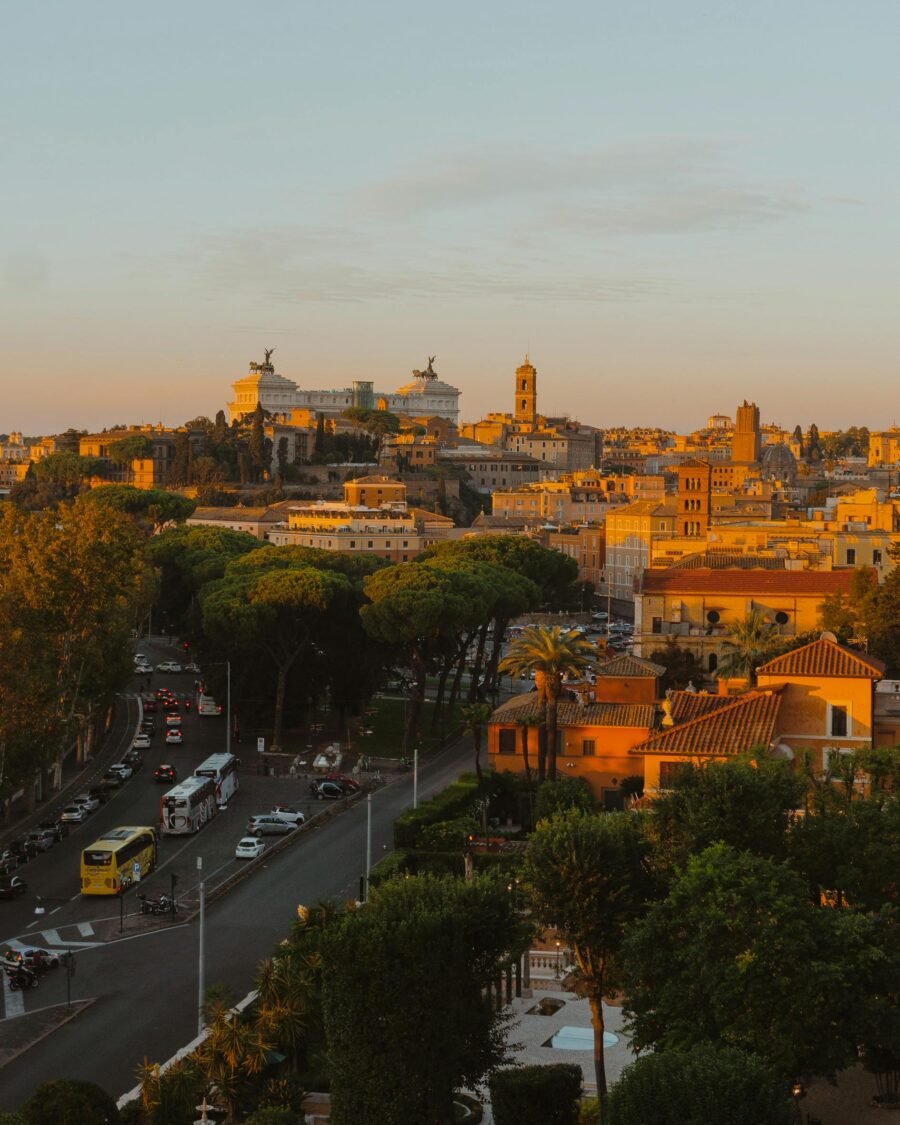
At 05:40 on a June morning the Pincio Terrace in Rome belongs to two joggers, a street sweeper and the sun rising behind you to light the dome of St Peter’s across the rooftops. By 09:00 the same balustrade is elbow to elbow. Almost every surprise proposal in Italy we photograph happens in that gap.
This is the step-by-step plan we walk through with every client: destination and light, booking early, a cover story that holds, ring and permit logistics, a rain plan, a sample timeline, an honest budget and the mistakes we see most often.
At a glance
- Top three formats: a sunrise viewpoint in Rome, a golden-hour terrace on the Amalfi Coast or Lake Como, a cypress road in Tuscany.
- Best time: sunrise almost everywhere; September is the best all-round month.
- Book and permits: photographer 4–8 weeks ahead; ticketed villas and gardens often need a photography permit; check the current rules before you go.
- Who this suits: anyone planning a surprise proposal in Italy who wants it photographed unnoticed.
- Budget: our surprise proposal package is 90 minutes from €490 in Rome; travel destinations from €500 (Florence) to €1,400 (Tuscany).
Step 1 — Choose the destination for the moment, not the postcard
Start with the scene you want your partner to remember: a city terrace with domes, a coast road above the sea, a cypress lane, a lake. Every destination has one or two spots that photograph superbly at a specific hour.
Rome gives the widest choice and easiest logistics: see the best places to propose in Rome. For cliffs and sea, our Amalfi Coast proposal spots; for open landscape, the Val d’Orcia and Chianti locations; for water and silence, Venice or Lake Como. Pick one destination for the question itself.
Best time: 2–3 months out, before flights and hotels fix the wrong base. Photographer’s tip: pick a spot within a 20-minute walk of your hotel; every taxi or ferry is where plans slip.
Step 2 — Pick the light: sunrise or golden hour
Sunrise means empty landmarks and soft directional light; in Rome the sun is up at about 05:40 in June and 07:30 in December. Golden hour gives warm colour and leads naturally into dinner, but the famous sunset terraces fill 30–45 minutes before sunset.
Orientation matters as much as the hour: the Gianicolo and Positano’s beach face east, so they are backlit at dawn; the Pincio and Praiano look toward the sunset. Month-by-month detail and sunrise tables are in our guide to the best time to propose in Italy.
Best time: sunrise for city landmarks, golden hour for coast and lakes. Photographer’s tip: not a morning person? Book a weekday sunset in a village, not a city: same light, a fraction of the crowd.
Step 3 — Book the photographer 4–8 weeks ahead
Book the photographer before the restaurant and, ideally, the hotel: the slot dictates where you stay. In peak season (May, June, September, October) we fill up 4–6 weeks out. A good brief takes ten minutes on WhatsApp: destination, dates, preferred hour, how you imagine the moment, and anything your partner would hate.
Ask any photographer: do they scout the spot at that hour, how far away do they stand, how fast do you get the key frame? Ours: yes, 20–40 metres with a long lens, within hours.
Best time: 6–8 weeks before in peak months, 4 weeks minimum otherwise. Photographer’s tip: keep the confirmation out of the shared inbox, calendar and card alerts; that is how most surprises die.
Step 4 — Build a cover story that survives questions
The best cover story is boring and slightly inconvenient, so it invites no scrutiny. Three that work: a sunrise walk “to beat the heat and the crowds” followed by a breakfast reservation; a photo tour booked as a gift, which puts a camera in plain sight and makes the question the only surprise; a dinner booking with a dress code and “let’s walk to the viewpoint first” as the detour.
Say it once, early in the trip, then stop talking about it; over-explained details are the ones that get remembered.
Best time: plant the story the day you arrive, not the night before. Photographer’s tip: the dinner reservation is the strongest story because it also solves the outfit problem.
Step 5 — Sort out the ring logistics
The ring travels in your carry-on, never in checked luggage, and ideally in a soft pouch rather than the box: a box prints through a jacket pocket and rattles in a bag. Insure it before you fly. Use the hotel safe; on the day it goes in a zipped or inside pocket on your body, not in a backpack.
If your partner shares your bags, ask the concierge to hold it until the morning. On a boat, the pocket must zip.
Best time: collect the ring at least a week before departure. Photographer’s tip: practise opening the pouch one-handed; kneeling on cobblestones while wrestling a clasp is the frame we most often cut.
Step 6 — Check permits, tickets and rules for the exact spot
Public streets and viewpoints are the simplest places to propose in Italy: a discreet shoot with no tripod or lights needs only good manners. Villa del Balbianello requires a photography permit and advance booking; the Boboli Gardens, Villa Cimbrone and the Giardini di Augusto are ticketed with their own photography rules; the Pantheon interior is ticketed and allows no shoots; nothing is shot inside the Vatican.
City rules matter too: sitting on the Spanish Steps is prohibited, the Trevi Fountain has had crowd-management measures since 2025, and Venice charges day-trippers an access fee on peak days. Check the current rules before you go.
Best time: when you shortlist the spot, and again the week before. Photographer’s tip: if a garden needs a permit, propose at a free viewpoint nearby and keep the garden for afterwards.
Step 7 — Make a rain plan
Italy is not reliably dry, least of all in November, March and April, and a surprise can’t wait if you’re flying home. Build one buffer day into the trip and put the proposal on the first of the two. If it rains we reschedule free of charge or shoot atmospheric frames: wet stone, a clear umbrella and an empty square make some of our strongest photos.
Have a covered alternative within walking distance, check the forecast 48 hours out, and make the final call with us the evening before, not at 05:00.
Best time: agree the buffer day when you book. Photographer’s tip: buy a clear umbrella before the trip; a black one hides both faces, a red one becomes the subject of every photo.
Step 8 — Outfits and extras: dress the moment, don’t decorate it
You control your own outfit and steer your partner’s through the cover story: “dinner with a view” gets a long dress out of the suitcase without a question. Cream, camel, terracotta, deep red, navy and sage work against Italian stone; avoid pure white in hard sun and tiny patterns. More in what to wear for a proposal shoot in Italy.
Extras: a bouquet can’t be carried undetected, so have the florist deliver to the restaurant. A musician in a public square usually needs authorisation from the municipality; check the current rules before you go. A private dinner afterwards is the extra we recommend most: it makes the cover story true.
Best time: outfits before packing; extras 2–3 weeks out. Photographer’s tip: a fresh manicure for whoever wears the ring; no petals on the ground, they announce the question.
Step 9 — Share the pin, agree the signal, walk the timeline
Two days before, we exchange a WhatsApp pin of the exact mark and agree a signal that means “now”: taking off a cap, a set phrase. Anything but waving at us. A sample June sunrise timeline on the Pincio Terrace in Rome:
- 04:45 — Alarm. The story: a sunrise walk before the heat, then breakfast.
- 05:15 — We confirm “in position” on WhatsApp; you reply with one emoji.
- 05:25 — Taxi to Piazza del Popolo, then the ramps up to the terrace.
- 05:38 — You reach the mark; sunrise at about 05:40 behind you lights St Peter’s dome.
- 05:45 — Signal, then the question. We hold a long lens on you from 30 metres.
- 05:55–06:45 — Portrait session: the terrace, Villa Borghese, the empty Piazza del Popolo.
- 07:00 — Breakfast. The express “yes” frame arrives within hours, the full gallery within 24.
Best time: reach the mark 5–10 minutes before the light. Photographer’s tip: walk the route alone the afternoon before; knowing the way beats any rehearsal.
Budget: what a surprise proposal in Italy costs
Photography is the one line we can quote exactly; everything else depends on your choices.
| Line | Covers | From |
|---|---|---|
| Surprise proposal package, Rome | 90 min: discreet positioning, the “yes”, portrait session, express key frame within hours | €490 |
| Standard couple session, Rome | 60 min, if you propose privately and want portraits | €380 |
| Travel destinations | Florence €500+, Milan €550+, Venice €650+, Lake Como €800+, Amalfi Coast €1,200+, Tuscany €1,400+ | €500+ |
| Capri & Sorrento, Cinque Terre, Puglia, Sicily | Custom quote, travel included | On request |
Add your own lines for the ring, the trip, dinner, flowers, any ticket or permit, and a musician if you go that way.
Mistakes to avoid
- Proposing at midday. Hard light, squinting and the biggest crowds of the day.
- Kneeling on the Spanish Steps. Sitting is prohibited and the crowd never thins; use the Pincio instead.
- Entering a ticketed villa or garden with a photographer and no permission.
- Proposing on a moving gondola with no plan for the photo. We can’t follow you on the water; agree the bridge we shoot from and where you ask.
- Over-explaining the cover story. One sentence, once.
- No plan for the hour after. A booked table turns the “yes” into a morning, not a moment.
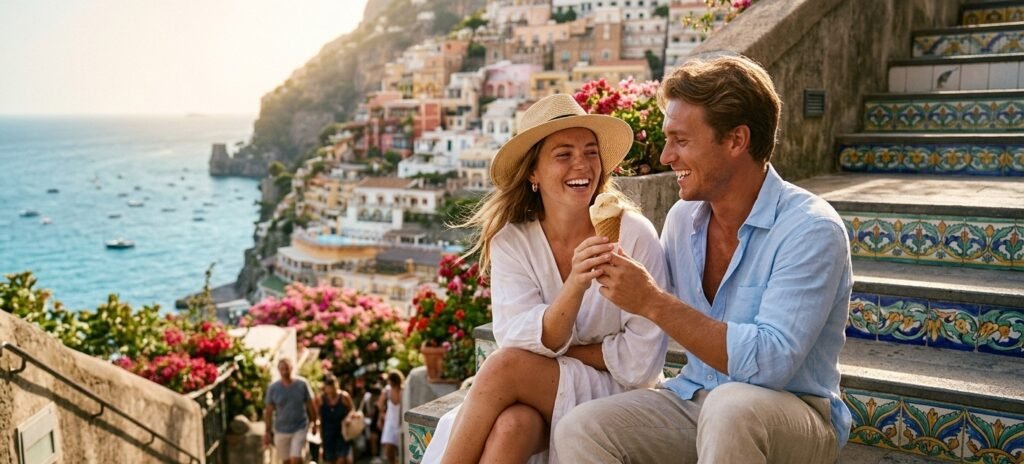
How a surprise proposal works here with us
We scout the exact spot at your chosen hour to check where the light falls and where people stand, then agree the cover story, exchange a WhatsApp pin of the mark and settle the signal.
On the day we are in position early, 20–40 metres away with a long lens, dressed like everyone else. You walk to the mark, signal and ask. We shoot the question, the answer and the ten seconds after it, then step in, say hello and run a 45–60 minute portrait session while the light holds.
The express edit of the key frame is on your phone within hours; the full gallery of 20–80 edited photos within 24 hours. Details are on our surprise proposal experience page.
Practical notes
- Book on WhatsApp (+39 351 361 1055) or via our contact page; peak season books out 4–6 weeks ahead.
- Pre-book a taxi for a dawn slot and allow 20 minutes more than the map says.
- Crowds: landmarks fill from about 09:00, sunset terraces 30–45 minutes before sunset; the Trevi Fountain works only 06:00–07:00.
- Seasons: September is the best all-round month; July and August bring heat and Ferragosto closures; in December Rome’s sun sets around 16:45.
- Footwear: cobblestones, ramps and stairs everywhere; flats or block heels.
- Bring water, tissues, a layer for dawn and a charged phone on silent.
Frequently asked questions
How far in advance should I book a proposal photographer in Italy?
Four to eight weeks is the safe window. Sunrise and golden-hour slots are the first to go, and in peak months (May, June, September and October) we are usually fully booked 4–6 weeks ahead. Book the photographer before the restaurant and, ideally, before the hotel, because the slot and the spot decide where it makes sense to stay.
Do I need a permit to propose in Italy?
Not for a discreet shoot on public streets, bridges and viewpoints with no tripod or lights. Ticketed villas, gardens and archaeological sites are different: Villa del Balbianello requires a photography permit and advance booking, and gardens such as Boboli or Villa Cimbrone apply their own rules. Rules change, so check the current ones before you go, and tell us the spot so we can advise.
How much does a surprise proposal photographer cost in Italy?
Our surprise proposal package in Rome is 90 minutes from €490: discreet positioning, the “yes”, a portrait session and an express edit of the key frame within hours. Outside Rome, travel destinations start from €500 in Florence, €550 in Milan, €650 in Venice, €800 on Lake Como, €1,200 on the Amalfi Coast and €1,400 in Tuscany; Capri, Cinque Terre, Puglia and Sicily are quoted individually.
How does the photographer stay hidden during a surprise proposal?
We scout the exact spot beforehand, share a WhatsApp pin of the mark and agree a signal with you. On the day we are in position early, 20–40 metres away with a long lens, dressed like any other visitor. You walk to the mark, give the signal and ask; we photograph the question, the answer and the seconds after it, then step in for the portrait session.
What happens if it rains on the day of the proposal?
We check the forecast together 48 hours out and make the final call the evening before. If it rains, we either reschedule free of charge or shoot atmospheric frames: wet stone, a clear umbrella and an empty square photograph beautifully. The safest plan is to build one buffer day into your trip and put the proposal on the first of the two.
how to propose · italy · planning · proposal photographer · surprise proposal
Planning a proposal or a couples shoot in Italy? Let us frame it.
Tell us the city and the date. We reply within a few hours with availability, the best light window and a quote.