Leggi questo articolo in italiano →
At 06:40 on a June morning the travertine of Piazza del Campidoglio is the colour of warm bread, and a cream silk dress against it glows. Two hours later the same stone throws back hard white light, the dress burns out and a black jacket becomes a hole in the frame.
This guide covers what to wear for an engagement or proposal photoshoot in Italy, destination by destination: palettes for Roman travertine, Amalfi whitewash and Tuscan clay, fabrics that move, shoes that survive cobblestones, and when to book the manicure your ring shots need. It is what we send our couples on WhatsApp the week before.
At a glance
- Three rules: contrast with the backdrop, fabrics that move, shoes you can walk in.
- Safest palettes: cream, camel and navy in Rome; white and pastels on the Amalfi Coast; sage and rust in Tuscany; jewel tones in Venice.
- Avoid: logos, neon, tiny checks and pinstripes (they shimmer on camera), pure white at midday.
- Best time: sunrise and golden hour flatter every fabric; book 4–6 weeks ahead in peak season.
- Who this suits: couples planning a proposal or engagement shoot anywhere in Italy.
- Budget: Rome couple session (60 min) from €380; surprise proposal (90 min) from €490; travel destinations from €500+ (Florence) to €1,400+ (Tuscany).
What to wear for an engagement photoshoot in Italy: colour palettes by destination
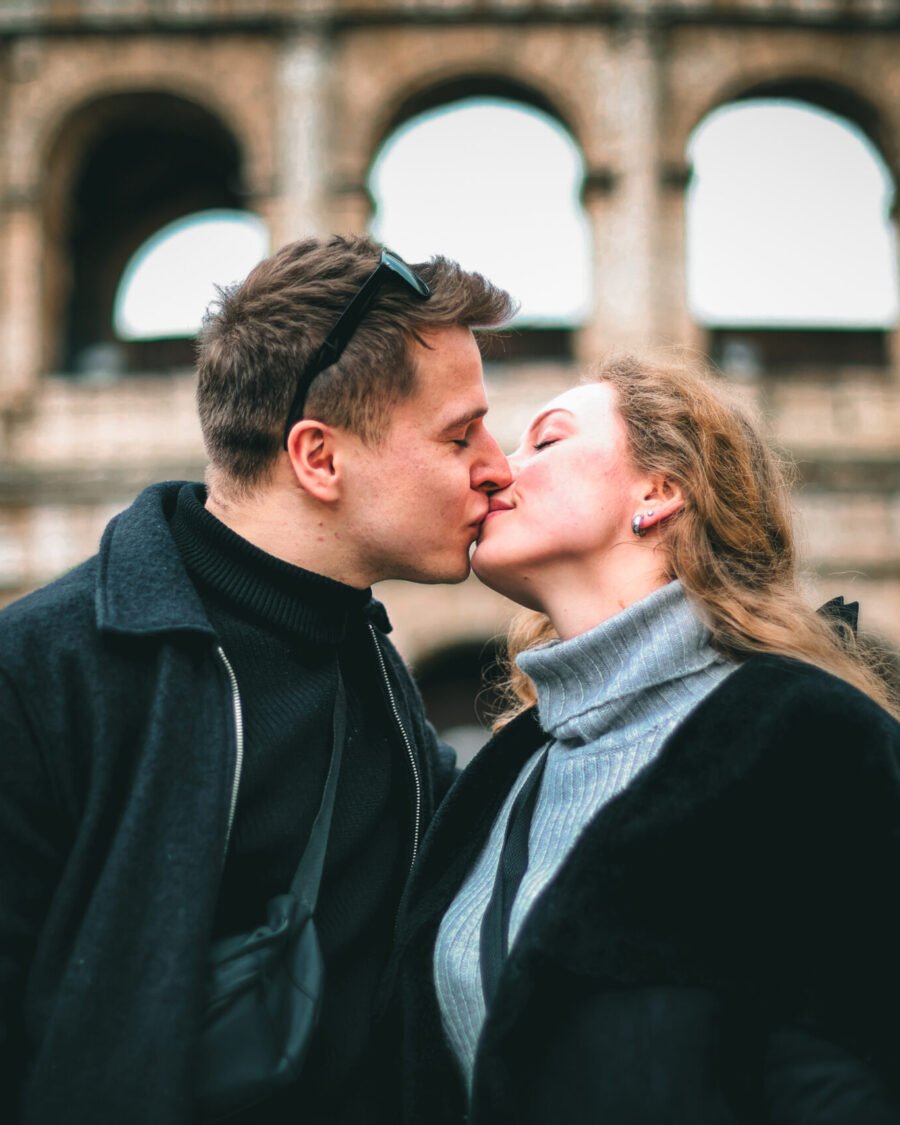
Italian backdrops are never neutral: Rome is ochre and travertine, the Amalfi Coast white plaster and cobalt sea, the Val d’Orcia clay and wheat. The rule we give every couple is contrast, not camouflage: a rust dress dissolves into a Trastevere wall, a sage one vanishes in an olive grove near Pienza. Pick one anchor colour that separates you from the stone, then borrow a second tone from the place itself.
| Destination | Palette that works | Avoid |
|---|---|---|
| Rome | Cream, camel, terracotta, deep red, navy, forest green | Orange and ochre (merge with the walls); pure white at midday |
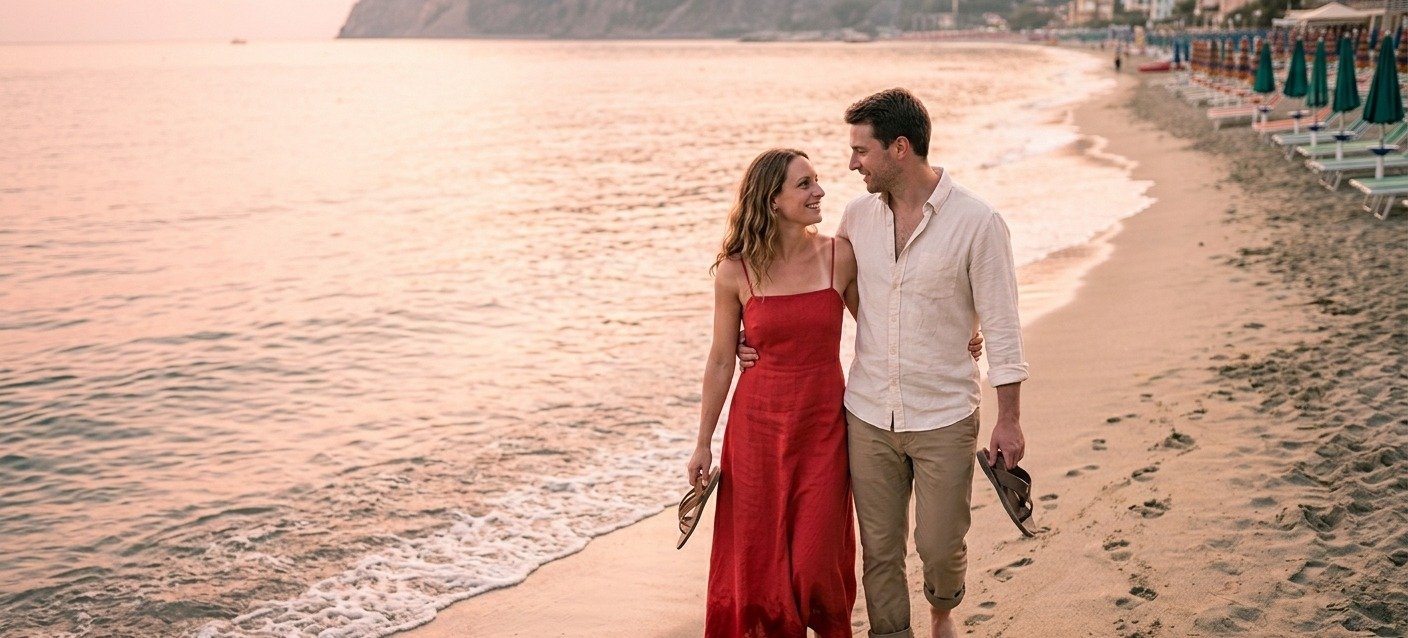
| Amalfi Coast & Capri | White, blush, sky blue, butter yellow, one red or cobalt pop | Turquoise and lemon yellow (compete with sea and tiles) |
| Tuscany | Cream, sage, rust, dusty rose, chocolate | Bright green in May, gold in late June (the fields swallow them) |
| Venice | Emerald, burgundy, sapphire, plum, ivory | Pale pink and light grey (fade in lagoon haze) |
| Lake Como | Navy, white, linen beige, dove grey | Neon; heavy black in summer |
| Puglia | White on white, ivory, sand, one olive or terracotta accent | Cool pastels (read grey against whitewash) |
Our Rome fashion colours and styles guide goes deeper, and the Rome couple photoshoot locations guide shows which wall you will stand in front of.
Best time: 3–4 weeks out, leaving time to order and tailor. Photographer’s tip: send us a phone photo of both outfits; we will say if they fight the backdrop.
Fabrics and movement
Positano’s terraces, the Gianicolo and the Val d’Orcia ridges share one thing: wind. Silk, chiffon, crepe, georgette and light linen catch it and give us a dress that moves when you turn; heavy jersey clings and shows every line beneath. Polyester satin stays at home: it creases in the suitcase and throws hotspots wherever the sun hits. Texture reads as expensive at 30 megapixels (raw silk, lace, slubbed linen); sequins scatter light into white specks. Linen wrinkles, but a natural crease looks relaxed on Lake Como or in Puglia, less so in Venice at blue hour.
Best time: try the dress outdoors on a windy afternoon, not in a fitting room. Photographer’s tip: a skirt that moves lets us direct a walk-and-turn.
Dress length and silhouettes
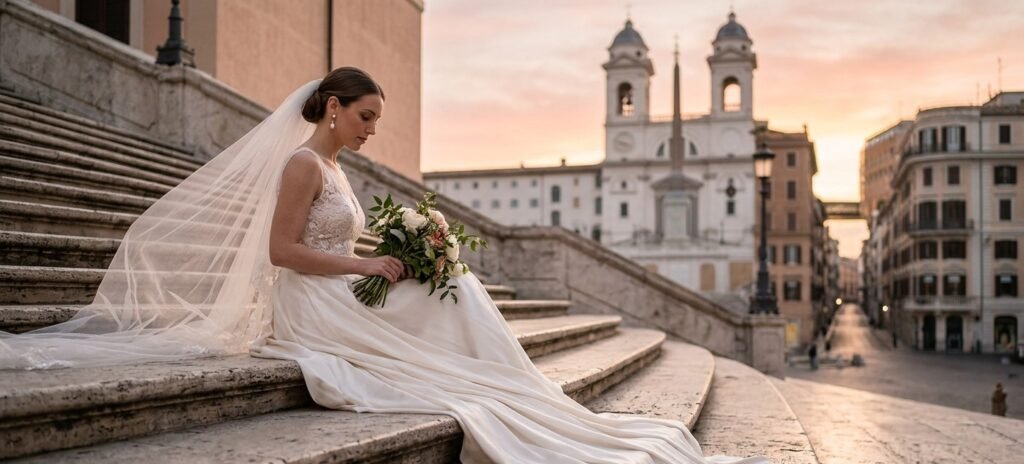
A floor-length gown is the most dramatic thing you can wear on a Tuscan white road or a Roman terrace, and it collects that road’s dust in twenty minutes. Midi lengths win on stairs: Positano’s lanes, the Lardarina steps in Corniglia, Venice’s bridges and the sides of the Spanish Steps all mean climbing with a photographer walking backwards ahead of you. Wrap, slip, fit-and-flare and soft A-line dresses work everywhere. Strapless bodices slide when your arms go up in the “yes” hug; very short hems are awkward on church steps. A tailored jumpsuit is a strong choice in Milan.
Best time: once we confirm the route, a week before. Photographer’s tip: bring one long and one midi; a change takes five minutes in a café bathroom.
Coordinating a couple
Coordinate, do not match. If one of you wears terracotta, the other wears cream and navy, not more terracotta. Think of a shared palette of two or three tones where each of you owns a different one: sage and cream, burgundy and camel, white and navy. Equal formality matters more than equal colour; a cocktail dress beside a polo shirt reads as two different events. Allow one pattern between you, large and soft. Tiny checks, houndstooth and fine pinstripes create moiré, a shimmer no editing removes cleanly. Logos and slogans date the photos.
Best time: lay both outfits side by side in daylight two weeks out. Photographer’s tip: photograph them together; if it looks busy as a thumbnail, the frames will too.
What the partner wears
Tailored beats casual every time. Shorts with sneakers, cargo trousers and shiny slim-fit suits are what we see most and like least. What works: cotton or linen trousers with a proper hem, a shirt with sleeves rolled twice, a blazer or unstructured jacket for Rome, Venice and Milan. Navy, olive, stone and cream are safe; a black suit in August turns into a silhouette by 10:00. Two details people forget: a t-shirt under an open collar shows in every frame, and a ring box prints through a trouser pocket, so use a slim box in the jacket’s inside pocket.
Best time: tailoring done two weeks ahead. Photographer’s tip: loafers, suede desert boots or clean leather sneakers; leather soles slip on polished marble.
Footwear and cobblestones
Rome’s sampietrini have gaps exactly the width of a stiletto heel. Positano is a staircase, Venice is some four hundred bridges, the Cinque Terre paths are stone steps and the Val d’Orcia roads are gravel. Bring flats for moving between spots (ballet flats, sandals, espadrilles) and change into heels only for the frame; a 5–7 cm block heel is the highest we suggest on cobbles. In a long dress your shoes rarely appear; in a midi they do, so keep them in the palette. New shoes plus an hour of walking mean blisters by the second location.
Best time: wear the shoes for a week before the trip. Photographer’s tip: a session covers one to two kilometres across three spots; ask us for the route.
Layers and seasons
Late-October dawn in Rome is around 12°C; a June dawn on the Gianicolo can be windy enough to want a wrap. A cashmere shawl, tailored coat or leather jacket in a palette colour becomes a prop, not a compromise; we shoot without it first, while you are warm. Winter: camel coats, wool midis, boots and gloves suit Venice fog and Rome’s empty landmarks. Spring: wisteria covers Rome from late March to April, so wear cream rather than lilac. Summer: white, navy and cream hide perspiration better than grey or pale blue. Autumn: rust and burgundy echo the Chianti vines at harvest.
Best time: check the forecast 48 hours out; adjust the layer, not the outfit. Photographer’s tip: a coat you can drop in two seconds; the best light lasts fifteen minutes.
Hair, make-up and manicure timing
Coastal humidity and Roman wind undo anything that needs a mirror to fix. Low buns, soft waves with texture spray and half-up styles survive; tight sleek looks do not, and hair across the face is our most common retouching request. Make-up should sit a notch above daily (matte base, defined brows, a lip from the palette) because a 30-megapixel file shows every shine spot; keep blotting papers in your bag. The manicure matters more than people expect: ring photographs are close-ups and hands appear in every embrace. Neutral or a palette tone; partners need clean nails too.
Best time: manicure 1–2 days ahead; hair and make-up done 30 minutes before we meet. Photographer’s tip: for a surprise, a “19:30 reservation” cover story makes dressing up feel natural.
The Flying Dress option
The Flying Dress is a long tulle gown with a train of several metres; an assistant lifts and releases it a second before the shutter, so it hangs in the air behind you. It is bolder than an engagement session and needs open space: the Colosseum viewpoints, Piazza del Campidoglio, the Gianicolo terrace. You wear a fitted slip or bodysuit underneath. Choose a colour not already in the scene: red or cobalt against Rome’s travertine, white or yellow on the Amalfi Coast. Your partner wears a solid neutral so the dress owns the frame. Details are on our Flying Dress experience page.
Best time: the first hour after sunrise, when a six-metre train has an empty piazza. Photographer’s tip: a light breeze helps, a strong wind fights us; we can shift the start.
Packing and steaming
Fold silk and chiffon in tissue paper, carry structured pieces in a garment bag, and keep the outfits in hand luggage. Italy uses 230 V sockets (types C, F and L), so a travel steamer needs the right adapter; many hotels have an iron on request. The bathroom trick works: hang the dress, run a hot shower for ten minutes with the door closed, leave it overnight. A small kit saves a session: lint roller, fashion tape, safety pins, a stain pen, blister plasters and a tote for the second outfit. We carry a bag during the shoot so your hands stay free.
Best time: unpack and hang everything the evening you arrive. Photographer’s tip: in the taxi, lift the skirt as you sit; car seats crease silk in ten minutes.
Day-to-night change
Golden hour and blue hour want different clothes. Low sun flatters cream, blush, sage and camel; twenty minutes after sunset the sky turns cobalt and those colours go flat and greyish. Jewel tones glow at blue hour on Ponte Sant’Angelo or along the Navigli, and black finally works against a dark background. Plan the change for the gap between the two lights: a slip dress under a coat, heels for flats, a blazer for your partner, a dress that zips without help. For a surprise proposal, pick one look for both lights: a jewel-tone midi, or cream with a dark jacket.
Best time: the 20–25 minutes between sunset and blue hour, in a café nearby. Photographer’s tip: 60 minutes covers one light well; book longer for both.
How a surprise proposal works here with us
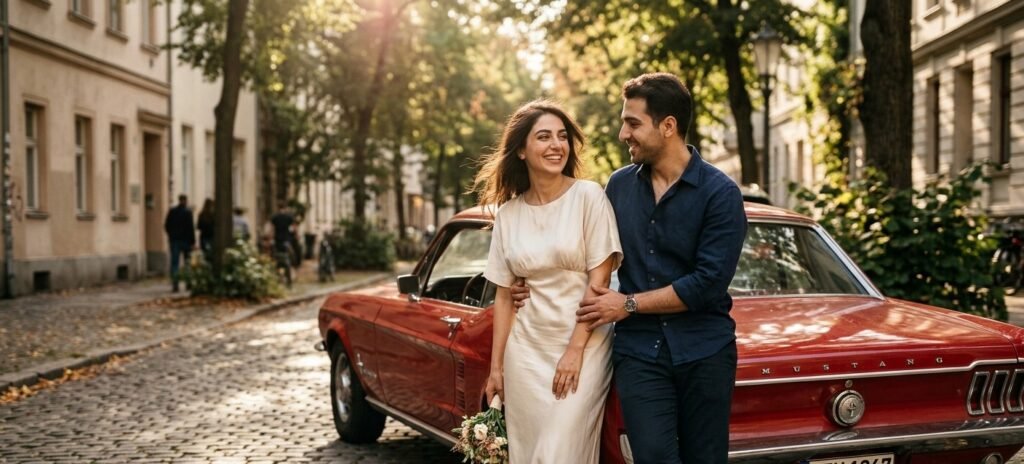
We scout the exact spot a day or two before: where the sun will be, where the crowd gathers, where a photographer can stand 20–40 metres away with a long lens unnoticed. You build the cover story (a sunrise walk, a “guided tour”, a 19:30 table); on the day we share a WhatsApp pin and agree a simple signal, such as stopping at a specific column. Tell us what you will both be wearing: from forty metres, in a crowd, we recognise the colour of a coat before a face. We photograph the question and the “yes”, then step in for a relaxed 45–60 minute portrait session; the edited gallery arrives within 24 hours, the key frame within hours. Details are on our surprise proposal experience page, and the palettes above apply just as well on the Amalfi Coast or among the cypress roads of Tuscany.
The dress people remember from a proposal is never the most expensive one; it is the one that moved when she turned around.
Practical notes
- Cobblestones in Rome, stairs in Positano and the Cinque Terre, bridges in Venice: flats between spots, heels only for the frame.
- Rome sunrise is around 05:40 in June and 07:30 in December; bring a wrap in a palette colour.
- Churches, including St Peter’s, require covered shoulders and knees. Ticketed villas and gardens (Boboli, Villa Carlotta, Villa del Balbianello) have photography rules and often need a permit; check the current rules before you go.
- Rain: we reschedule free or shoot atmospheric frames; a clear umbrella photographs well on wet stone.
- Day kit: flats, blotting papers, lint roller, safety pins, water, a tote for the second outfit.
- Delivery: 20–80 edited photos within 24 hours. Peak season: book 4–6 weeks ahead via WhatsApp (+39 351 361 1055) or the contact page.
Frequently asked questions
What colours should I wear for an engagement photoshoot in Rome?
Rome’s backdrops are warm ochre, travertine and terracotta, so choose colours that contrast: cream, camel, deep red, navy and forest green all work. Avoid orange and ochre, which merge with the walls, and pure white in midday sun, which loses all detail. One anchor colour for you plus a neutral for your partner keeps the frame calm and the faces central.
Should we wear matching outfits for a couple photoshoot in Italy?
Coordinate rather than match. Share a palette of two or three tones and let each of you own a different one: sage and cream, burgundy and camel, white and navy. Keep the level of formality equal, allow one soft, large pattern between you, and avoid tiny checks or fine pinstripes, which shimmer on camera. Logos and slogans date the photos and distract from your faces.
Can I wear heels on the cobblestones in Rome or the stairs in Positano?
You can, but not for walking. Rome’s sampietrini have gaps that trap stiletto heels, and Positano, Venice and the Cinque Terre involve constant stairs. Bring flats or sandals for moving between spots and change into a block heel of 5–7 cm only for the frames. In a long dress the shoes rarely show anyway, so comfort wins.
What should the person proposing wear for a surprise proposal in Italy?
Something tailored: linen or cotton trousers with a proper hem, a shirt with rolled sleeves and a blazer for Rome, Venice or Milan. Avoid shorts with sneakers and shiny slim-fit suits. Carry the ring in a slim box in a jacket’s inside pocket, because a standard box prints through trousers, and tell us the outfit colours so we can spot you from 40 metres away.
How much does an engagement or proposal photoshoot in Italy cost, and does an outfit change cost extra?
A 60-minute couple session in Rome starts from €380 and a 90-minute surprise proposal from €490; travel destinations start from €500+ in Florence, €650+ in Venice, €800+ on Lake Como and €1,200+ on the Amalfi Coast. A quick outfit change fits inside a standard session, but for a golden-hour look and a blue-hour look book a longer one. Photos are delivered within 24 hours.
engagement photoshoot · italy · planning · proposal · style guide · what to wear
Planning a proposal or a couples shoot in Italy? Let us frame it.
Tell us the city and the date. We reply within a few hours with availability, the best light window and a quote.