Leggi questo articolo in italiano →
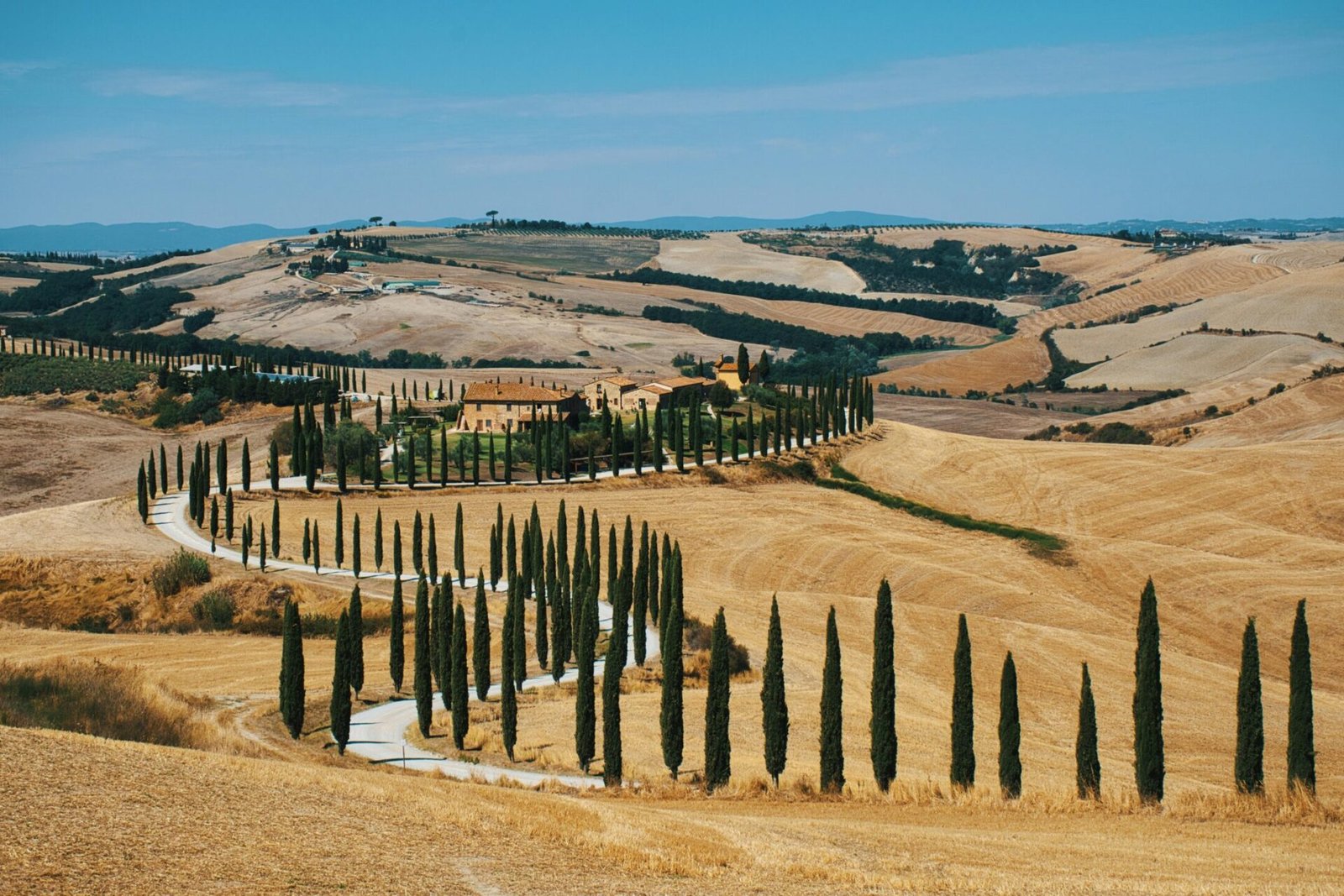
At 06:10 on a late-June morning the wheat below Pienza is already gold, the cypresses on the road to Monticchiello throw long shadows across the tarmac, and the only sound is a tractor two valleys away. By 10:00 the same bend has six cars on it and the light has gone flat.
This guide to Tuscany photoshoot locations covers the places we actually use for couples, engagements and surprise proposals: the Val d’Orcia classics, the Crete Senesi, Chianti’s abbey and vineyards, San Gimignano and Siena. For each: the exact spot, the light, the crowds and how to reach it.
At a glance
- Top three spots: the Cappella di Vitaleta, the cypress road up to Monticchiello, and Badia a Passignano in Chianti.
- Best months: mid-May to late June for green turning gold; late September to October for harvest, vine colour and dawn fog.
- Best hours: sunrise (about 05:40 in June, 07:20 in mid-October) and the last 90 minutes before sunset.
- Permits and crowds: chapel and cypress groups stand on private farmland: photograph from roads and tracks. Towers, gardens and wine estates need a ticket or arrangement. Lay-bys fill from 09:00.
- Who it suits: couples who want landscape rather than monuments, and surprise proposals with no bystanders.
- Budget: Tuscany sessions from €1,400 with travel from Rome included; 20–80 edited photos within 24 hours.
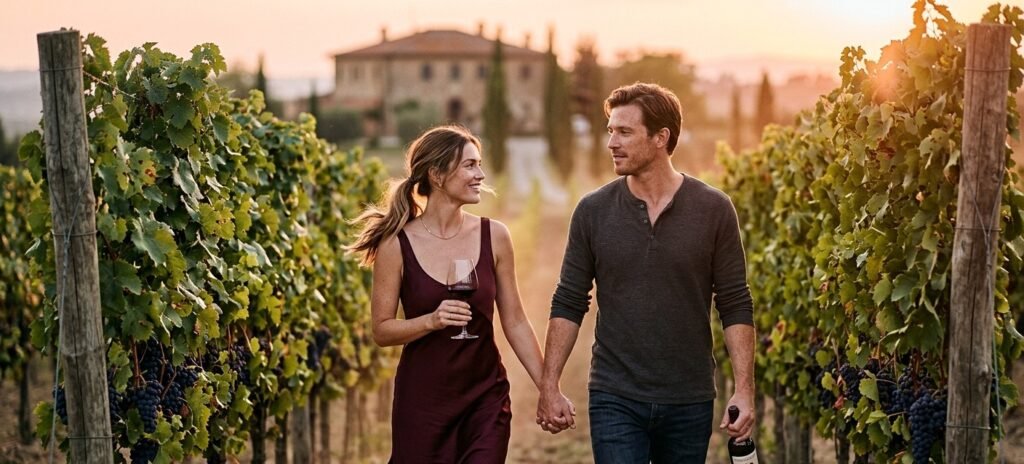
Cappella della Madonna di Vitaleta
The small stone chapel between San Quirico d’Orcia and Pienza is the image most people picture when they search for Tuscany photoshoot locations: a ridge, two clusters of cypresses, Monte Amiata behind. The classic frame is from the lay-by on the SP146 between the two towns; a white gravel track leads down to it in about ten minutes.
Chapel and fields are private farmland: stay on the track and out of the crops. We shoot wide from the road with a long lens, stacking couple, chapel and mountain into one plane, then walk down for closer portraits.
Best time: sunrise, May to October; in autumn the ridge floats above the fog. Photographer’s tip: cream or rust reads from 150 m away; black disappears against the cypresses.
San Quirico d’Orcia: the cypress ring and Bagno Vignoni
A few minutes north of San Quirico on the SR2 Via Cassia, a round clump of cypresses stands alone on a knoll, reached from a lay-by and a short farm track. Isolated trees work from every direction: silhouettes at dawn, side-lit in the evening, a dark shape in fog.
Ten minutes on, Bagno Vignoni’s main square is a sixteenth-century pool of hot spring water framed by stone houses and a loggia. Bathing is not allowed, but on a cold morning the steam turns the village into a film set.
Best time: the 30 minutes after sunrise for the cypresses; a cold, still dawn in autumn or winter for steam. Photographer’s tip: at the pool, stand at the far end; we shoot low through the steam.
Monticchiello’s cypress road and the Gladiator fields at Terrapille
South-east of Pienza, the road up to the walled hamlet of Monticchiello climbs in tight hairpins lined with cypresses. From the last bend below the walls, the curves stack into the S-shape you have seen a thousand times. It is a working road: we place you on the verge and wait for gaps between cars.
Directly below Pienza, a farm track leads to Podere Terrapille, the wheat field Maximus walks through in Gladiator, about 15 minutes on foot from the town walls. The fields belong to the farm: shoot across the wheat, not in it.
Best time: the last two hours before sunset for the hairpins; Terrapille at sunrise. Photographer’s tip: we run our classic-car sessions here: a vintage Alfa on the second hairpin, shot from the bend above, needs no props.
Pienza: Via dell’Amore, Via del Bacio and the walls
Pienza is small enough to shoot in an hour. Start on Via del Casello, the walk along the southern walls with the Val d’Orcia and Monte Amiata straight ahead; the lanes off it are Via dell’Amore, Via del Bacio and Via della Fortuna. Finish in Piazza Pio II, where cathedral, Palazzo Piccolomini and the well form one composition.
Tour groups own the town from about 10:00 to 17:00; before 08:30 it is yours. Palazzo Piccolomini’s hanging garden is ticketed and has its own photography rules: check before planning a proposal there.
Best time: 07:30–08:30 for empty lanes; the walls at sunset. Photographer’s tip: the Via dell’Amore sign is a two-minute photo; the wall walk 30 m away is the real location.
Montepulciano and the Tempio di San Biagio
Montepulciano is the steepest of the hill towns: Via di Gracciano nel Corso climbs from Porta al Prato to Piazza Grande. The square at the top, with the Palazzo Comunale, its tower (climbable with a ticket) and the unfinished cathedral façade, is quiet before 09:00 and after 19:00.
West of the town stands the Tempio di San Biagio, a Renaissance church in travertine at the end of a cypress avenue. Avenue and meadow are free and put church, trees and hilltop town in one frame; at day’s end the lawn is one of the calmest proposal spots around.
Best time: the last hour of sun, when the travertine turns honey-coloured; Piazza Grande at dawn. Photographer’s tip: from the avenue we also shoot back toward the town: hill and walls make the better background.
Crete Senesi: the clay hills around Asciano
Between Siena and Asciano the landscape turns to bare clay hills, almost lunar when ploughed, threaded with single lanes of cypresses climbing to lonely farmhouses. The SP438 Lauretana toward Asciano is the spine of the area: from it you see the cypress lanes, the Site Transitoire sculpture near Leonina and, on autumn mornings, fog in the hollows.
Everything here is working farmland. The most photographed drive, the winding cypress lane below Baccoleno, is a private farm: shoot it from the public road. Nearby, Monte Oliveto Maggiore abbey has a free cypress-lined approach.
Best time: October and November for ploughed, silver-grey hills and dawn fog; May for green ridges. Photographer’s tip: the Crete are about shape: stand on a ridgeline with only sky behind you.
Chianti: Greve, Castellina and Badia a Passignano
Chianti is greener and more enclosed than the Val d’Orcia: vineyards, oak woods, stone farmhouses and the winding SR222 Chiantigiana. Greve in Chianti has a triangular arcaded piazza that works in early light. Castellina has Via delle Volte, a covered medieval walkway with windows onto the valley, for harsh midday sun.
The strongest single frame is Badia a Passignano, an eleventh-century abbey in a ring of cypresses with vineyards running down to it. It is a working monastery: photograph from the lanes and vineyard edges. To shoot among the vines we arrange access with an estate, usually with a tasting.
Best time: late September to mid-October for harvest and first vine colour; late October for red and gold leaves. Photographer’s tip: vineyards glow backlit in the last hour of sun; from the front they are green stripes.
San Gimignano and its towers
Fourteen medieval towers still stand on San Gimignano’s ridge. Inside the walls, Piazza della Cisterna with its well and Piazza del Duomo are the heart of the town. Above them the Rocca di Montestaffoli, a ruined fortress turned public garden, gives a free view over towers and countryside: the best sunset spot in town.
Coaches arrive from around 10:00 and the squares stay busy until 18:00; park in the lots outside the walls. For the skyline, the panoramic lay-bys on the approach roads give you all the towers in one frame.
Best time: 07:00–08:30 for empty squares; the Rocca an hour before sunset. Photographer’s tip: in the squares we use a 35 mm lens with the towers rising behind you; from the Rocca, the long lens.
Siena: Piazza del Campo and the Duomo
Piazza del Campo is a brick shell sloping down to the Palazzo Pubblico and the Torre del Mangia, one of the few famous Italian squares where sitting on the ground is tradition, not a fine. At dawn the bowl is in even shade and you can be photographed alone in the middle; the tower is climbed with a timed ticket.
Avoid the days around the Palio, 2 July and 16 August, when the Campo is a racetrack. The Duomo’s striped façade and the ticketed panorama from the Facciatone, the unfinished New Cathedral façade, are the other frames.
Best time: sunrise on the Campo; summer late afternoons, when the Palazzo Pubblico’s brick catches the sun. Photographer’s tip: from the top of the Campo by Fonte Gaia, a wide lens takes in slope, tower and couple.
Seasonal colour: green, gold, brown
May and early June are green, with poppies along the field edges; the wheat turns gold in the last ten days of June and is cut in early July, when the sunflowers open for two to three weeks. From late July through August the hills are ploughed, brown and dusty. September brings the harvest, October the vine colour and the first dawn fog, which can last into November. Our guide to the best time to propose in Italy goes month by month.
In the Val d’Orcia the light is the location: the same cypress ring is a postcard at 06:00 and a car park at noon.
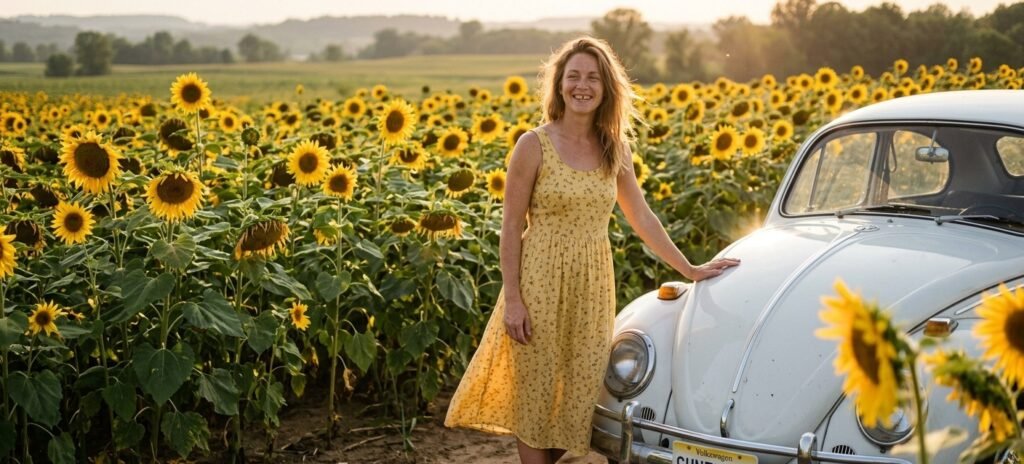
How a surprise proposal works here with us
We scout the exact spot the evening before or at first light: the specific bend on the Monticchiello road, the point on the Vitaleta track where the chapel sits between the cypresses. You get a cover story that fits the day, usually a sunrise drive to the famous view or a private tasting. We share a WhatsApp pin so you walk to the right patch of grass and agree a simple signal, such as taking off your jacket.
We stand 20–40 m away with a long lens, looking like one more person photographing the landscape. You ask, we cover the reaction, then step in for a 45–60 minute portrait session while the light holds. The key frame is edited and sent within hours; the full gallery follows within 24 hours. See our surprise proposal experience.
Practical notes
- Getting there: just over two hours by car from Rome (A1, Chiusi-Chianciano exit), about 1h45 from Florence; a car is essential. The hill towns have limited-traffic centres: park outside the walls.
- Crowds by hour: lay-bys are empty before 08:00, busy 09:30–18:00 in high season, calm again in the last hour before sunset.
- Permits and tickets: roadsides and public tracks are free; fields and cypress avenues are private. Towers, palace gardens and the Siena cathedral complex are ticketed, some with photography rules; wine estates need advance arrangement. Check the current rules before you go.
- White roads: the best tracks are unpaved gravel: expect dust, bring flats and change into heels only for the frames. Our what-to-wear guide covers Tuscan palettes and layers for dawn.
- Weather: summer afternoons are hot and hazy; autumn dawns can be 5°C with fog that lifts by 09:00. If it rains we reschedule for free or shoot the moody version.
- Booking: sunrise slots go first: book four to six weeks ahead in peak season. Our destinations page compares regions and our guide to proposing in Florence covers the city, 1h45 north.
Frequently asked questions
Do I need a permit to take photos at the Vitaleta chapel or on the Val d'Orcia cypress roads?
No permit is needed to photograph from public roads, lay-bys and the gravel tracks, which is where we shoot. The chapel, the cypress groups and the fields around them are private farmland, so stay on the tracks and out of the crops. Ticketed sites such as Palazzo Piccolomini's garden, the towers and wine estates need a ticket or advance arrangement; check the current rules before you go.
Is sunrise or sunset better for a photoshoot in Val d'Orcia?
Both work, for different reasons. Sunrise gives you empty roads, side light on the ridges and, in autumn, fog in the valley; in June that means meeting around 05:15. Sunset gives warmer, longer light and cypress silhouettes, but the famous lay-bys are busier. For surprise proposals in high season we usually recommend sunrise, because nobody else is there.
How much does a proposal or couples photographer cost in Tuscany?
Our Tuscany sessions start from €1,400, with travel from Rome included in the quote. You receive 20–80 edited photos within 24 hours through an online gallery; longer multi-location days include more. For a surprise proposal the key frame is edited and sent within hours. We shoot on Sony Alpha 7 full-frame cameras with prime lenses and grade the images in Lightroom.
When is Tuscany green and when is it golden?
Green from late April to early June, with poppies at the field edges in May. The wheat turns gold in the last ten days of June and is cut in early July, when sunflowers bloom for two or three weeks. Late July and August are ploughed, brown and dusty. September brings the harvest, October the vine colour and dawn fog, which can last into November.
Can we do a Tuscany photoshoot as a day trip from Rome or Florence?
Yes, but it is better to stay one night. The Val d'Orcia is just over two hours by car from Rome and about 1h45 from Florence, and the best light is at sunrise, which is hard to reach from either city. A car is essential for the cypress roads. We drive up from Rome and meet you at the agreed spot, often your agriturismo.
chianti · engagement photoshoot · photo locations · proposal · tuscany · val d'orcia
Planning a proposal or a couples shoot in Italy? Let us frame it.
Tell us the city and the date. We reply within a few hours with availability, the best light window and a quote.